


About NYC ACC KILLS memoriam posts
Like virtually all New York City officials, including Mayor Zohran Mamdani and City Council Speaker Julie Menin, NYC ACC staff as a rule do not respond to uncomfortable questions concerning the kill pound they’re responsible for.
Information in NYC ACC KILLS memoriam posts, therefore, is drawn from reader tips, records ACC has chosen or is required to make public, and the ACC so-called “at-risk outcomes” list.
As evidenced by its monthly and annual outcome data reports, ACC kills far more cats and dogs than appear on the at-risk list. ACC exterminates many healthy and adoptable cats and dogs without first offering them for adoption. Victims of this practice are known among advocates as “silent kills.”
Under direction from higher-ups including chief DVM Robin Brennen, ACC will often spay or neuter a cat or dog only to exterminate her or him during recovery, or soon after. This practice is known as “spay-neuter-kill.”
Known silent kills and spay-neuter-kill victims are identified as such by NYC ACC KILLS.
Since cats are underrepresented on ACC’s “at-risk outcomes” list, they are, unfortunately, also underrepresented here.

Due to ACC obfuscation and sloppy record-keeping, memoriam posts are, sadly, bound to be incomplete. The Scoop New York continually adds names and images of ACC victims to NYC ACC KILLS as we find them. Follow NYC ACC KILLS and The Scoop New York on social media for updates.
If you’re an NYC ACC networker or volunteer and would like to contribute information on exterminated cats and dogs, or share your experience working with ACC, we want to hear from you. Discretion guaranteed.
A note about names: Many animals come to NYC ACC with unknown histories, including their names. In addition, ACC does not always use the name a cat or dog is accustomed to, even if the agency knows what it is. As a result, many animals exterminated by ACC are never properly identified. Unfortunately, for the most part NYC ACC KILLS has only the names provided by ACC, even if those names are incorrect or nonsensical. ACC-assigned names are presented here without quotation marks unless TSNY can confirm an animal was known by a different name when admitted to ACC.
ACC operates under putative supervision by the New York City Department of Health and Mental Hygiene, which endorses the publicly-funded killing of healthy and adoptable cats and dogs at will and with impunity.
Quotes from ACC notes may be edited for style and clarity. — Ed.
CHIEF NYC ACC VETERINARIAN
Robin Brennen, Sr VP Animal Health & Welfare: Email
OFFICIALS RESPONSIBLE FOR NYC ACC OVERSIGHT
NYS Ag Commissioner Richard Ball: 518-457-2771; Email
Mayor Zohran Mamdani: Contact form
City Council Speaker Julie Menin: 212-788-7210; Email
Council health chair Lynn Schulman: 212-788-6981; Email
Comptroller Mark Levine: 212-669-3916; Contact forms
Public Advocate Jumaane Williams: 212-669-7250; Email
City Council members: Lookup
Borough presidents: BX; BK; MN; SI; QS
NYC DOH Commissioner Alister Martin: 311; Contact form
NYC DOH ACC minder Corinne Schiff: 646-632-6496; Email

In memoriam

Chanel No 5 [259270]: 2 years old; killed November 8. Chanel No 5 was at ACC because a child she lived with punched her with a closed fist multiple times and in response, Chanel bit. She came to ACC underweight. It took three weeks of extra feeding to get her to a good weight. ACC didn’t flag her for cruelty. She was a beautiful pup with the saddest eyes.
On intake she was friendly, wagging her tail, and remained so. She leaned into pets with handlers and solicited attention and affection. Easily leashed, she did well on walks, checking in with the handler, responding to commands and not reacting to dogs or passersby. Easily returned to her pop-up crate in the hallway.
Toward the end, of course, they need to find something to blame. They wrote, “She moves with strong forward pulling and makes herself choke and cough.” Blaming the pup for choking is a common ACC refrain. They could alleviate the issue with a harness, but that would give them one less absurd excuse to kill.
Chanel’s “at-risk” memo cited two excuses to kill her. One, the bite at home where she was being abused, and two, “observed to have poor impulse control” because she lunged at a handler and bit the linens they were carrying.
That’s quite a comparison, being hit by a person and biting the linens.
ACC made Chanel TDO (“transfer door only”), which means she was not allowed to leave her kennel for walks or potty breaks. While in TDO, dogs get no human contact. Handlers stand outside of the cage; they throw treats in and pretend to engage the dogs they’ve imprisoned.
ACC made Chanel TDO due to FAS (fear, anxiety, stress), a vague cover-your-ass judgment, and held her prisoner in her kennel for the last week of her life. She likely walked out only to be led to her death.
ACC killed Chanel on day 59.
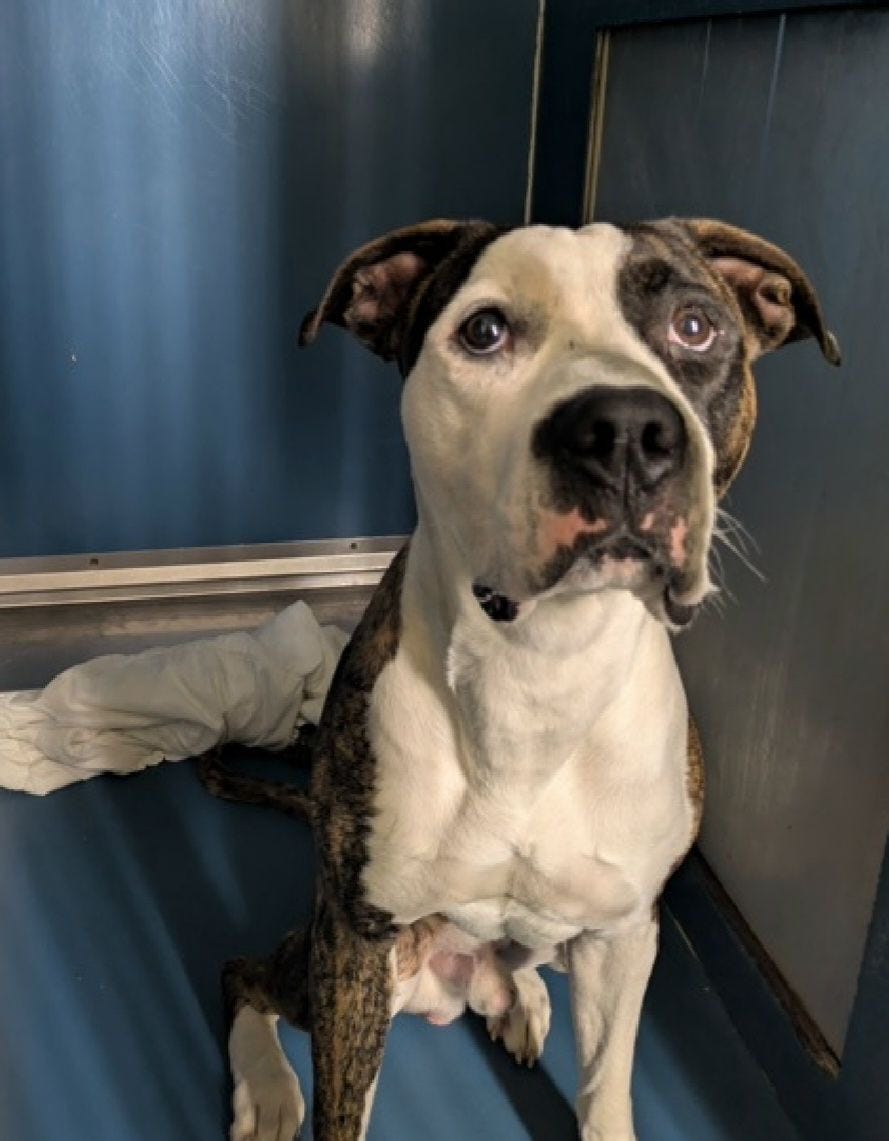
Easy Cheesy [269278]: 4 years old; killed November 8. Easy Cheesy, an underweight stray, was terrified on arrival. But he seemed to take friendly interest in other dogs, pulling toward them with wags and a loose body. It also didn’t take him too long to trust a handler, placing his paws in their lap and leaning in for pets.
ACC made Easy Cheesy TDO, a prisoner in his kennel, probably around October 30. No more laps to comfort him. No walks outside of his cage.
Two days before they killed him, he got a cage-side visit. They wrote, “Easy cheesy is relaxed in his kennel as handler offers treats to a nearby dog. As handler walks towards Easy Cheesy’s kennel he gets up and rushes to the front of his kennel with an incredibly tense body. His tail is straight out back. He has a very tense face with a hard stare. Handler speaks to him softly and offers treats and he follows the handlers hands with his eyes. Interaction is ended to avoid increasing his FAS.”
To avoid increasing his FAS? Do they really think putting a dog in lock-up isn’t terrifying enough? On that day, he probably thought he might get out; he was disappointed once again. How many days did he have that hope?
He wasn’t given very many days for hoping. ACC exterminated Easy Cheesy on day 14.
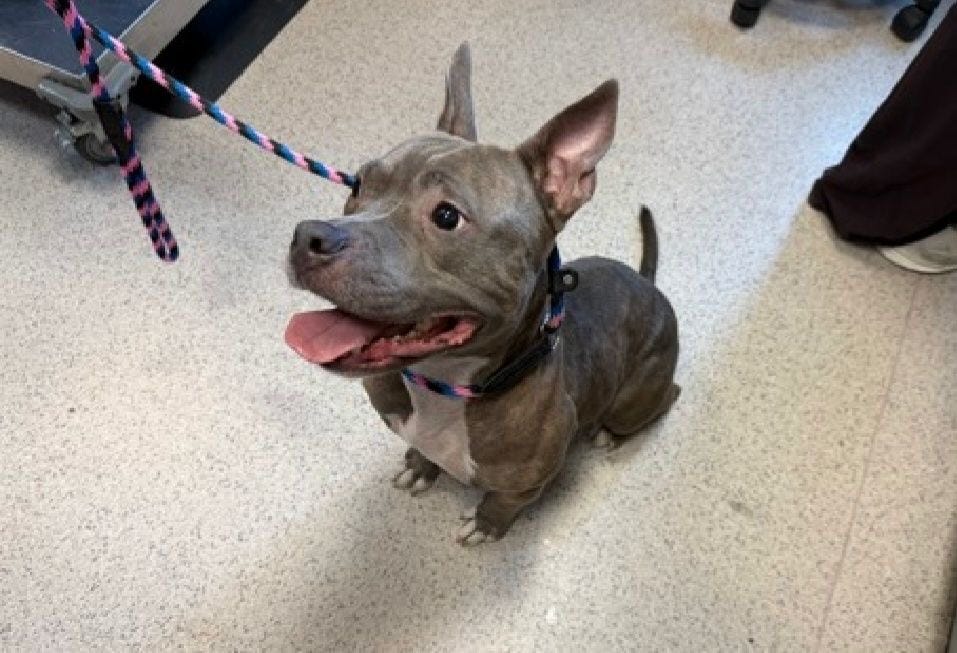
Witty Aisy [268975]: 2 years old; killed November 8. Little Witty Aisy was abandoned at an A train station. When a police officer went to scoop her up, she bit their hand. By the time she got to ACC she had recovered, was wagging her tail and exuberantly friendly.
But then once in her kennel she was trembling and fearful. On walks she was hyper-vigilant, and hearing the barking dogs on return would become tense. Another reversal. After being at ACC several days she becomes wiggly in the play yard, even jumped on the handler’s lap, soliciting and enjoying pets.
On November 3 and 4, she was again stressed, nervous around other dogs. ACC made her TDO, a prisoner in her kennel. They did not state why they made her TDO.
New York shelter regulations require that dogs are taken out of their kennel 20 minutes a day, five days per week, and that “in the event such activities are not possible due to any animal’s health, behavior, order of the commissioner or legal restriction, the condition and reason shall be documented in such animal’s medical record.”
The reason was not recorded. ACC just said she was designated TDO.
ACC killed Witty Aisy on day 16

Bruno [269356]: 4 years old; killed November 8. Bruno, a stray, just wanted out.
He felt trapped in his kennel at ACC. Clearly, he was panicking. While being leashed he would try to rush out and on least one occasion he was reported to be banging his head against the kennel door.
He needed a behaviorist to help him. Instead, he got the compliance cocktail of human-grade sedatives ACC uses as a substitute for care.
Toward the end of Bruno’s brief stay at ACC, he began biting the leash.
Bruno was a dog in distress but still listed as adoptable on the day ACC killed him, day 13.

Coco Melon [256445]: 2 years old; killed November 9. Twice stray in five months.
“Both times, he was abandoned and brought in by police. Both times, he was friendly and playful and outgoing with everyone on intake,” a volunteer said.
The first time ACC named him Patches. When he came in stray the second time, he had healing wounds with sutures on his head and cheek. Three days later, they gave him the full compliance cocktail: Trazodone, Gabapentin, and Clonidine.
There are no notes on him from that point on, until the last one on November 2. On that day, they report him to be leash biting and claimed his teeth made contact with a handler’s hand when being leashed. There was no broken skin.
At some point, Coco Melon was made TDO, never allowed out of his kennel. We don’t know when. Nor why there is a 22-day gap in their notes on him.
Volunteers adored him. “Coco Melon is full of oozy delicious goodness,” one wrote. “His jowls alone have me swooning. And on our only second meeting, he’s already offering sweet kisses to me. It’s no secret that Coco Melon is just my type of boy and I generally find the personalities of these meat-a-balls match their aesthetic perfectly: jovial, playful and silly. Coco Melon is no exception! He’s the goofiest guy, loves playing with toys and showing them off to you. In spite of his less than athletic body, he enjoys running and jumping around.”
ACC killed Coco Melon on day 35, yet another adopt-return-kill victim.

Misa [264110]: 3 years old; killed November 11. A stray, Misa was social and friendly on intake. ACC wrote, “Misa has shown social and affiliative behavior with staff, greeting known handlers with a loose, wiggly body and leaning in for pets. Misa has also shown anxious behavior and reactivity while at the care center, and has redirected onto staff — attempting to bite at pant legs — when she has been reacting to other dogs and they have moved her away.”
Of course, being visibly anxious will get you killed at the “shelter.”
A volunteer wrote, “One of the first things I notice about beautiful 3-year-old Misa is how incredibly soft her fur is. As I walk her, I realize that softness extends to her personality too: she turns and looks at me gently at corners, softly asking which way to go. Her eyes exude a soft sweetness as I offer her treats and scritches. She softly trots by my side, block after block and my hope grows that she will find her way out of the shelter as soon as possible …
“At the shelter she has been loose and wiggly with handlers, eager for a break from her kennel. Each time I walk by her kennel and see those soft eyes, covered in brown patches and her soft white body waggling, I think ‘I hope your next chapter is as soft as you are, sweet girl.’”
Misa was spayed in September, but there was no next chapter. ACC killed her on day 72.


Moko [259499]: 4 years old; killed November 11. A volunteer wrote: “Moko is one of those dogs whose kennel has notes on it like ‘use soft bedding’ and ‘third feedings’ due to the poor condition of his body. His ribs show, his nails are overgrown, he looks to have some skin allergies. His story involves being given away ‘for free’ [to the family that surrendered him to ACC] and kept in a kennel without a bottom tray laden with urine soaked wee pads [by the previous owner]. You hear his story and look at his body and say ‘ugh’ or ‘aww’.
“But Moko did not get the memo that he is pitiable. On walks he trots freely, full of energy, delighted to sniff all the sniffs, and all the extra treats you toss toward him as you eye his rib cage just read as happy surprises to him.”
The family that saved him from a bad situation and then surrendered him to ACC, due to allergies, described him as a very sweet and gentle dog. He lived with them for two months.
On intake, ACC reported Moko was friendly and “social jumping.” Eventually his habit of jumping a lot and jumping high got him in trouble. On one occasion while jumping, Moko’s teeth came into contact with the handler’s cheek. No skin was broken.
ACC increased the sedatives they were already giving him. Then they killed Moko on day 43.

Armstrong [266294]: 2 years old; killed November 11. Left behind after an eviction, Armstrong was friendly, wiggly, and soliciting attention on intake. But like most, he was soon stressed by the chaotic, violent “care center.”
By day three, he had bloody diarrhea and CIRDC. By day four, the tip of his nose was irritated and bleeding from rubbing his nose on the kennel wall. He continued to have intermittent diarrhea and wasn’t eating well. By his last week at ACC they noticed he had lost 10 pounds.
Always easily leashed, but low energy and aloof at first, once he started feeling better, he became more social with handlers, happy to accept pets. Sadly, he also began leash biting, a form of play that ACC labels a “behavior problem.”
Nothing seemed to go Armstong’s way. He even had “happy tail” — an injury to his tail from wagging it in the small confines of a kennel.
ACC killed Armstrong on day 50.

Gia [179720]: 4 years old: killed November 11. Gia’s family was evicted from their home. They said, “Gia is so sweet and loving, she’s the perfect dog to snuggle with.”
Volunteers agreed: “Reviews for Gia are in and they are glowing! Her former owner says she’s lived with children, great with other dogs, adores strangers, and never has accidents. The volunteers are equally crazy about this super sweet girl; we all think she’s so great that at some point we gave up on the walking log and after all the notes that said, ‘amazing!’ ‘Adore her!’ we just started writing, ‘ditto.’”
A volunteer who took Gia out for the day wrote, “Gia is an absolutely wonderful dog with an infectious enthusiasm for life, a curious mind, and a loving personality that reveals itself more and more as you get to know her. She loves exploring the world around her, and we covered an impressive seven miles together, with her excitement and energy lasting from beginning to end.“
On another day outing, a volunteer wrote, “Gia is on the GO! She would make an excellent hiking buddy and adventure companion. After a quick pup cup, Gia and I toured every inch of Central Park … Although Gia was immediately affectionate and waggy tailed with me, overall she seemed nervous and needed a warm up introduction to the strangers in the park that asked to pet her. She was excellent with kids!”
By November 6, for reasons unknown, ACC made Gia TDO — not allowed to leave her kennel.
Was her first walk to their death chamber? Likely. ACC killed Gia on day 101.

Mr Nonchalant [268944]: 2 years old; killed November 11. Mr. Nonchalant was found with another dog in a park. That dog was placed with a rescue. On intake, Nonchalant was friendly and wiggly, but the notes on Nonchalant after that are limited. They said he bit a handler’s knee being returned to his kennel, though the alleged bite didn’t break the skin.
Said a volunteer: “Mr Nonchalant can’t leave his kennel anymore. It’s a fate assigned to an increasing number of dogs these days as the shelter population has swollen well past the capacity it was built for and dogs are increasingly stressed.
“We only met him for the first time this past weekend. He’s strikingly handsome with his pointer ears and gorgeous blue eyes. He’s fuzzy and rested his head in our hands for us to scratch. He took breaks from sampling our treats to chase toys around, and it was a delight to see his young big (65 lbs!) body move freely about the yard. Something we hope he gets to experience again.”
He didn’t. ACC killed Mr Nonchalant, TDO prisoner, on day 20.

Rosetta [269281]: 12 years old; killed November 13. Rosetta was an underweight stray, sick with an upper respiratory tract infection, not eating and vomiting.
Being sick is another no-no at kill-happy ACC. Predictably, they put her on the “at-risk” list, saying, ”She needs supportive care in a veterinary clinic to recover.”
A volunteer wrote, “she seems to be a confident, sassy lady who will let you know when she’s in the mood to socialize, and then when she’d prefer to hang back and have some independent time. Curious, laid-back, bold, and gorgeous.” ACC killed Rosetta on day 18.

Swizel Stick [269080]: 3 years old; killed November 14. Swizel Stick, a stray, was sick during most of her short time at ACC.
She arrived with a corneal ulcer and after six days began vomiting and not eating. They noted that she had lost weight. Then she got diarrhea.
Twelve days later, ACC noted pneumonia on her medical records. She still wasn’t eating and they changed her prognosis to poor, writing that she needed supportive care in a veterinary clinic to recover.
Despite feeling poorly, she was always eager to get out of her kennel, enjoyed playing fetch and laying against the legs of handlers.
Regardless, ACC killed her on day 21.
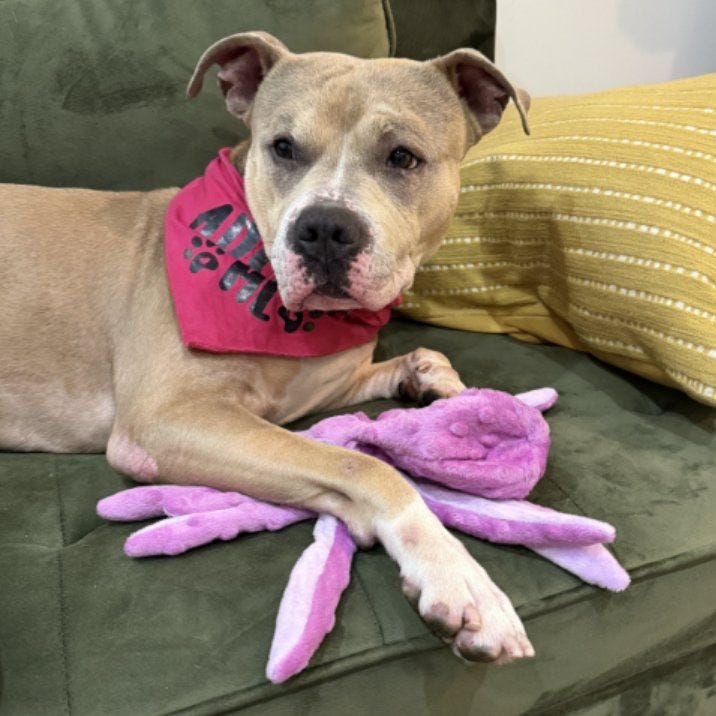
Bear [263304]: 5 years old; killed November 14. Bear, according to a volunteer, was “always sitting calmly, waiting patiently for his turn to walk: an impressive feat for a dog spending 23.5 hours living in a cramped overflow room. In the play yard, though, Bear has youthful exuberance that makes me wonder if he’s lying about his age!
“Estimated to be around 5, his excitement for playtime is unmatched. He’s happy with any toys you’ve got on offer (including a hose — he can have fun with whatever’s available, a real resourceful guy, and will zoomie around excitedly.
“Bear was found tied up to a fence in the Bronx, so we don’t know much about his previous life. When police responded to the scene, they noted that they were met with a very friendly and outgoing dog. All we know about him we’ve discovered during his shelter stay: He’s a happy, sociable guy, and during his assessment, he was comfortable around other dogs, ignoring them while walking with a loose, relaxed body.”
In foster for a brief period, they wrote, “He may as well be called teddy bear with the amount he loves to cuddle. His favorite place to be is probably on your lap! This guy is 5-and-a-half though he might as well be a puppy with all of the energy he has, he loves going for walks or throwing around his toys. His favorite toy is probably his own teddy bear which he likes to nibble and clean.”
Bear was returned to ACC due to a bite when the foster tried to take food from his mouth.
His time at ACC is largely unknown, as they only made notes on three occasions.
ACC never said in Bear’s records that he was TDO, a prisoner in his kennel not let out for walks. But it seems likely. Their last two notes on him, on November 5 and 9 ,are cage-side visits. They don’t attempt to leash him or take him out. On the 5th, the handler asks Bear to give the “paw” command and Bear put his paw on the kennel bars. That’s all he could do. TDO means no human contact.
ACC killed Bear on day 83.
Which is just how Mayor Mamdani and Speaker Menin want it.
