

The Scoop New York is an indie non-profit web site and newsletter covering the movement for a true no-kill New York, from BUF to BK.
We take names. We step on toes. We bring receipts.
NYC ACC KILLS, published by TSNY, enumerates and memorializes adoptable cats and dogs who were nonetheless exterminated by Animal Care Centers of New York City.
Every week, NYC ACC KILLS subscribers receive The Weekly Carnage: bios, photos and videos of adoptable cats and dogs known to be recent ACC victims. Subscribers also get monthly memoriam posts that include ACC data summaries along with an updated compendium of animals whose lives were ended by ACC that month. Videos from current and prior months may also be found on The Scoop New York’s YouTube channel.
For more New York companion animal news, follow NYC ACC KILLS and The Scoop New York on social media.


About NYC ACC KILLS memoriam posts
Like virtually all New York City officials, including Mayor Zohran Mamdani and City Council Speaker Julie Menin, NYC ACC staff as a rule do not respond to uncomfortable questions concerning the kill pound they’re responsible for.
Information in NYC ACC KILLS memoriam posts, therefore, is drawn from reader tips, records ACC has chosen or is required to make public, and the ACC so-called “at-risk outcomes” list.
As evidenced by its monthly and annual outcome data reports, ACC kills far more cats and dogs than appear on the at-risk list. ACC exterminates many healthy and adoptable cats and dogs without first offering them for adoption. Victims of this practice are known among advocates as “silent kills.”
Under direction from higher-ups including chief DVM Robin Brennen, ACC will often spay or neuter a cat or dog only to exterminate her or him during recovery, or soon after. This practice is known as “spay-neuter-kill.”
Known silent kills and spay-neuter-kill victims are identified as such by NYC ACC KILLS.
Since cats are underrepresented on ACC’s “at-risk outcomes” list, they are, unfortunately, also underrepresented here.

Due to ACC obfuscation and sloppy record-keeping, memoriam posts are, sadly, bound to be incomplete. The Scoop New York continually adds names and images of ACC victims to NYC ACC KILLS as we find them. Follow NYC ACC KILLS and The Scoop New York on social media for updates.
If you’re an NYC ACC networker or volunteer and would like to contribute information on exterminated cats and dogs, or share your experience working with ACC, we want to hear from you. Discretion guaranteed.
A note about names: Many animals come to NYC ACC with unknown histories, including their names. In addition, ACC does not always use the name a cat or dog is accustomed to, even if the agency knows what it is. As a result, many animals exterminated by ACC are never properly identified. Unfortunately, for the most part NYC ACC KILLS has only the names provided by ACC, even if those names are incorrect or nonsensical. ACC-assigned names are presented here without quotation marks unless TSNY can confirm an animal was known by a different name when admitted to ACC.
ACC operates under putative supervision by the New York City Department of Health and Mental Hygiene, which endorses the publicly-funded killing of healthy and adoptable cats and dogs at will and with impunity.
CHIEF NYC ACC VETERINARIAN
Robin Brennen, Sr VP Animal Health & Welfare: Email
OFFICIALS RESPONSIBLE FOR NYC ACC OVERSIGHT
NYS Ag Commissioner Richard Ball: 518-457-2771; Email
Mayor Zohran Mamdani: Contact form
City Council Speaker Julie Menin: 212-788-7210; Email
Council health chair Lynn Schulman: 212-788-6981; Email
Comptroller Mark Levine: 212-669-3916; Contact forms
Public Advocate Jumaane Williams: 212-669-7250; Email
City Council members: Lookup
Borough presidents: BX; BK; MN; SI; QS
NYC DOH Commissioner Alister Martin: 311; Contact form
NYC DOH ACC minder Corinne Schiff: 646-632-6496; Email

In memoriam

Sheba [257666]: 2 years old; killed October 25. Sheba lived with six adults, three kids, one dog and two cats. Friendly and shy, they said, she was playful with all. She liked hugs and to follow the kids around during the day. Sheba was also adored by volunteers. Even ACC extolled her virtues, writing, “This sweet, silly, social girl is waiting for her next adventure. Sheba loves cuddles, naps, walks and being wherever her people are.”
A volunteer who took Sheba on a day’s outing wrote, “We took Sheba, an adorable, sweet and very social pup, to Central Park. She began the day as if she was seeing the world for the first time. She walked exuberantly to the park, anxious to see what was around every corner, darting back and forth, and taking in everything around her.
“Sheba is a very active and happy dog and she showed this in multiple ways. Once we got to the park, she was interested in all the people, dogs and wildlife around her. Of all the dogs we have taken on a BoroughBreak to the park, she was the only one who paid attention to the birds and pigeons. She especially enjoyed running into the flocks of pigeons around her in order to disperse them.
“Sheba’s cute little high-pitched squeal of a bark had everyone thinking she was a puppy and this garnered a lot of attention throughout the day.
“After lunch and a game of fetch, Sheba settled down on the grass in the shade and chewed on a toy for a while, then promptly fell asleep under the tree. She would occasionally awaken, notice that she was a little too far away from us for her liking, and do the ‘army crawl’ to get closer before falling asleep again.”
Another volunteer wrote that Sheba loved to play fetch, “If Sheba was human…[she’d] be an outstanding athlete.“ Even though Sheba often felt poorly, with more than one bout of CIRDC, as well as chronic skin and ear infections, her love of play included carrying and chasing soccer balls, jumping over agility bars, and pattern games.
In August after she had been there almost two months, ACC wrote, “K9 behavior notes high arousal, panting/lip licking and pulling hard on leash to the point of choking.” So they did what they do: gave her more sedatives. They increased the Trazodone she was already getting and added Gabapentin.
This was their excuse for killing her: “Noted to push off the handler and off the wall while trying to get closer to the other dogs. Sheba responds well to a treat trail leading out of the kennel room. However, she is still observed to pull hard and push off her hind legs.”
For sins such as these, even social dogs that greet the world with wonder are exterminated. ACC killed Sheba on day 128.
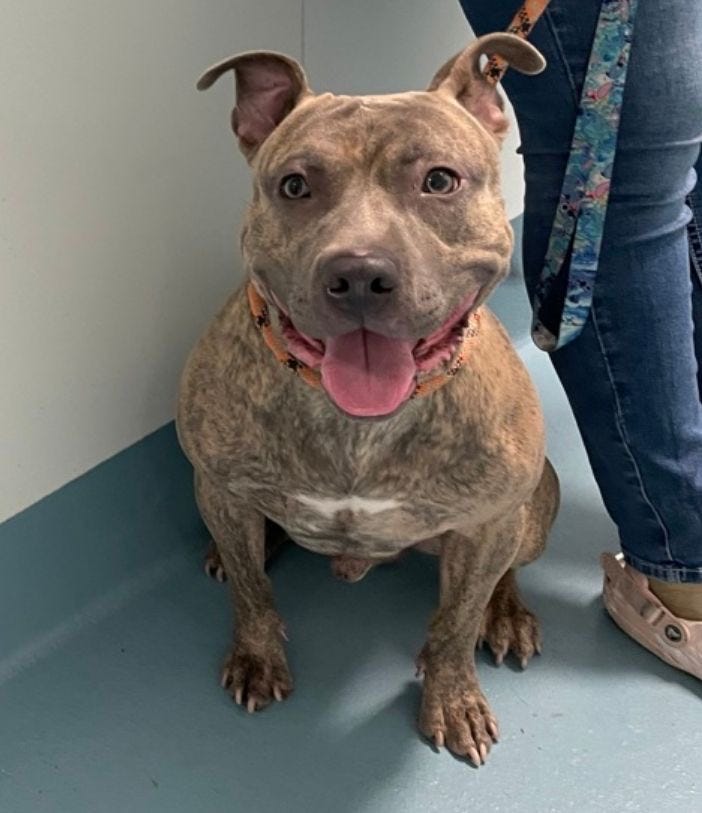
Rex [249918]: 2 years old; killed October 26. Rex’s human said he was affectionate, playful, and very active. He loved baths and car rides. Also, he was anxious when left alone.
Alone and overwhelmed at ACC, he didn’t do well. He didn’t want to go back in his kennel after walks. After a few days there, he had blood in his stool, possibly due to stress. ACC added more sedatives and made Rex TDO (transfer door only), never allowing him out of his kennel for walks or potty breaks. The transfer door allows them to shuttle a dog from one kennel to another while they clean the filth they made them live in. But with the confinement chambers so crowded, there may be a dog living on the other side of the transfer door, making living conditions even worse.
A volunteer stopped by his kennel and photographed Rex lying in his kennel, now very alone. “This baby didn’t even get up for a treat,” they wrote. “Couldn’t help but cry when I saw him.”
ACC killed Rex on day 19.

Gideon [266799]: 3 years old; killed October 26. The police said underweight Gideon, found stray, was friendly and easygoing. He didn’t need to be crated; instead he and another (unrelated) dog were transported loose in the car. ACC wrote that he was “friendly with staff and handled a crowded intake situation in the lobby very well.”
At first everything went well. He was easily leashed, social, and did well on walks. As his video above shows, he enjoyed chasing balls. But after a week living in a too small pop up crate, Gideon did something unexpected. A handler had their hand resting on top of the crate and he bit. That was enough for them to throw him in the clinker.
After that, he was never allowed out for walks or potty breaks. His only human contact was people standing outside of his crate and tossing treats inside. On the sixth day of captivity, he was sitting at the front of the kennel wagging his tail when they approached. His tail stopped wagging as the days wore on. Though when someone would ask him to sit for treats, he still would. They gave him sedatives “to tolerate confinement.”
Gideon was in his kennel, never let out, for three weeks. He was finally let out to be walked to ACC’s death chamber on his 29th day at ACC.

Rice Cake [234794]: 3 years old; killed October 28. Too many dogs that arrive stray and are reclaimed eventually show up stray again. The first time Rice Cake arrived at ACC in August of 2025 she came in with five dogs and seven cats. The second time, she was found alone sitting in the corner of a building with a small bag of dog food next to her.
On her first intake, Rice Cake was underweight, with severely chronic otitis externa, an infection of the ear canal. The second time, she was underweight, also with a severe ear infection. Even so, she was reported to be very friendly and outgoing.
A volunteer who remembered her from her fist time at ACC wrote, “For her part, she’s much the same as last year. Playful with toys, filled with personality. After her photo shoot, as we walked a bit she carried her toy shaking it and stopping mid walk to play. Maybe toys and other necessities feel like novel luxuries to her so we paused and played and continued as needed. Rice Cake has also attended playgroup on numerous occasions and been social with other dogs!
But she’s a young 3-year-old girl, with uncomfortable ears, and the shelter has become frustrating for her and it’s showing. Living 24/7 in a crate is not for the faint of heart.”
Toys and treats were Rice Cake’s favorite things and although she was trained to politely exchange them, she never wanted to be without them. This became a problem at ACC.
They changed Rice Cake’s “status to TDO after [an] incident where she continued to bite, hold, shake treat pouch and then began jumping and biting at handler’s stomach.” Note, she did not bite the handler’s stomach; that’s where the treat pouches were.
TDO (transfer door only) means they are not allowed out of their kennel at all. Not for walks or potty breaks. For the last week of her life, she was a prisoner, allowed out only to walk to her death.
ACC killed Rice Cake on day 50.
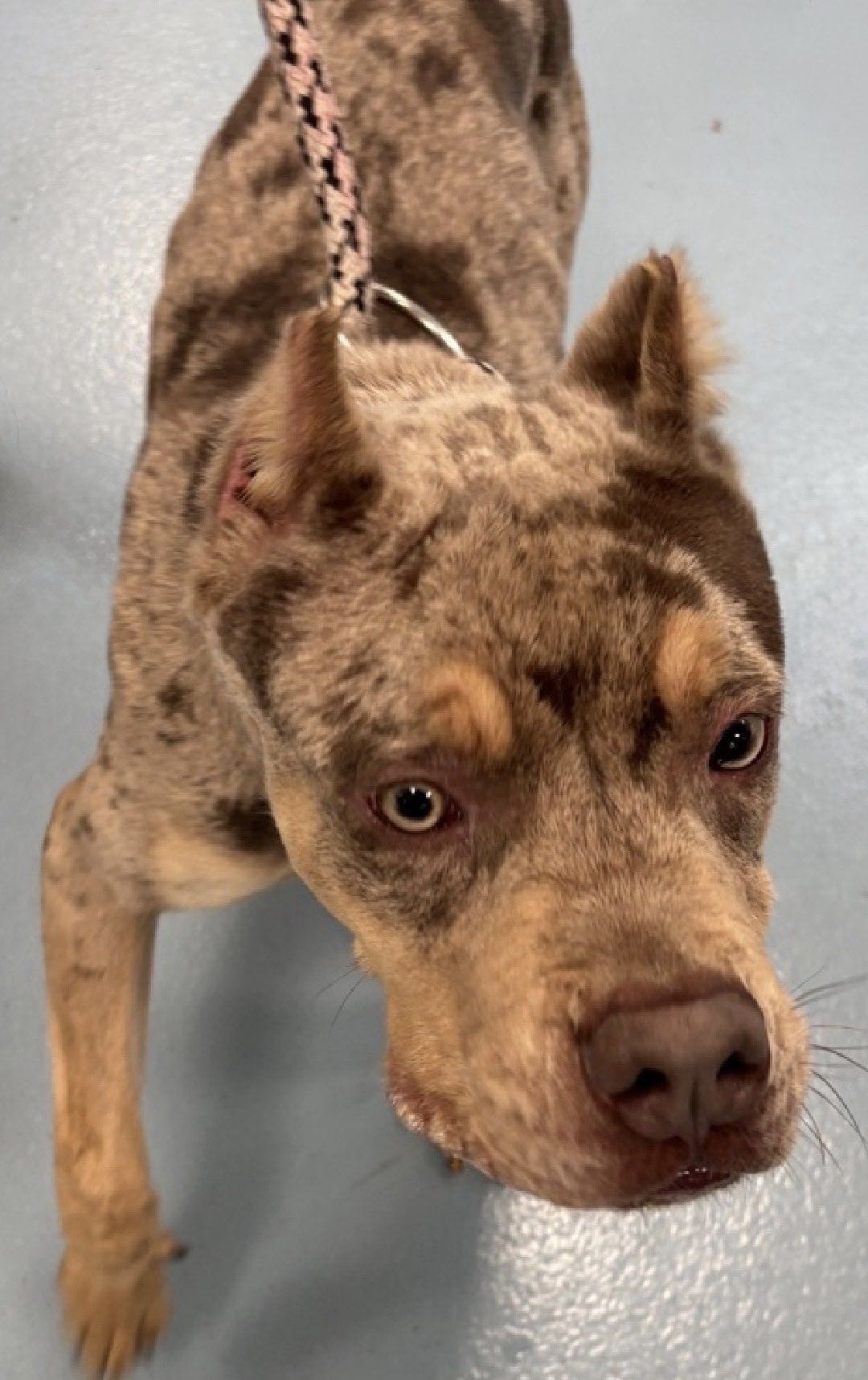
Grayson [266478]: 7 months old; killed October 28. Grayson was surrendered to ACC September 29 and killed 30 days later, a silent kill.
Because ACC removes records when they kill a cat or dog, we know nothing about him. A volunteer wrote, “Grayson is a playful boy who loves to play and needs good toys and positive outlets for his energy. He has lived with dogs and children.”
Under Mayor Mamdani, ACC has stopped releasing data on silent kills to the public. Meaning victims like Grayson aren’t even presented as statistics. As if his brief time on earth, when he suffered so much pain at the hands of people who were supposed to protect him, never happened.


Cloudberry [266209]: 2 years old; killed October 29. ACC made scant notes on Cloudberry, a stray.
What we know about him is from his video (above) and what a volunteer wrote. They said, “Cloudberry was found alone in an apartment. Having met him a few times, I imagine he was pretty scared. And his notes say he was, and is. For the next month, Cloudberry lived in a crate in an overflow room at the shelter. I got to meet him a few times, and each time I was enamored of his shy brindle face shyly looking at me. On our last time together he was the perfect mix of playful and cuddly, and I found myself giving him the nickname Cloudy and telling him I loved him.”
Cloudberry finally got out of that crate and into a kennel, but only because ACC made him TDO — transfer door only — their euphemistic acronym for taking a dog prisoner, never allowed out for walks or potty breaks.
Cloudberry was condemned to solitary for leash biting. When he was finally let out for a walk it was to his death.
ACC Killed Cloudberry 37 days after he was found alone in an apartment.

Little Prince [258459]: 8 years old; killed October 29. Little Prince was handed off to family members of his owner, who then faced eviction.
He was described as friendly and social on intake. A volunteer wrote, “Some may look at a dog like Little Prince and keep walking. To a younger dog, a healthier dog, a happier looking dog. And that’s ok — he is not for them. But when we look at his cloudy eyes, the way he lays down and looks up at you with them, how he hobbles a bit to bring you toys but does it anyway, we see a lot more … when we meet him he’s shy but comfortable enough to hang out, play a bit, and show off his tricks.
“Little Prince has the potential to be his royal self but will need some TLC for his eyes, skin, and leg. He’s 8 years old, a young senior with plenty of love left in him.“
On October 12, a handler was attempting to leash Little Prince, who was biting the leash. When they grabbed his collar to steady him, Little Prince redirected and bit.
ACC made him TDO, a prisoner in his kennel. Nine days later, they wrote, “Little Prince is barking and jumping from his Kuranda bed to the door repeatedly as the handler approaches. The handler offers him a treat which he will take with a hard mouth, pressing his nose and lips into the bars of the kennel hard as he takes the treat from the handler. The handler will toss a treat to the back of the kennel and then exit.”
ACC killed Little Prince on day 123. Was it the bite? Or because he was ill?
The whole time he was there, Little Prince suffered from untreated conjunctivitis, a condition they believed to be painful and causing vision impairment, likely due to KCS, known as “dry eye.”
ACC wrote, “Unable to diagnose or treat ocular disease due to behavior in shelter — seek placement or consider EHR [euthanasia] due to ongoing disease/QOL [quality of life].”
True to form, ACC chose to kill rather than treat.

Coconut [269254]: age unknown; killed October 30 or 31. We don’t know Coconut’s age or sex.
We do know Coconut was found on October 26 and never listed for foster or adoption, a silent kill.
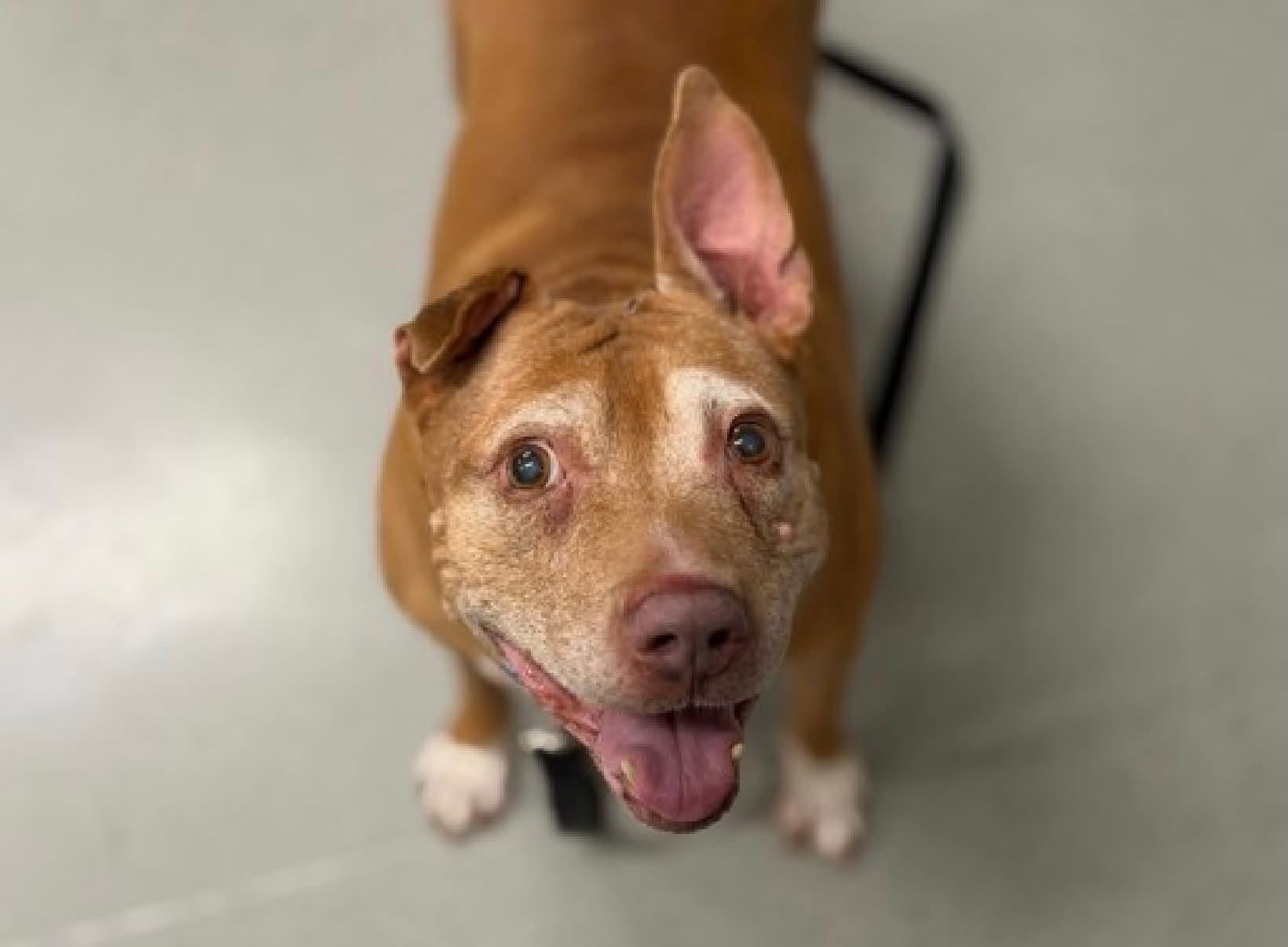
Goldie [57079]: 12 years old; killed October 31. Goldie was last at ACC seven years before. She was adopted.
This time, they didn’t give anyone the chance to save her. They kept her on hold, listed her briefly, then killed quickly her. They housed Goldie, a senior pup with medical issues, in a pop-up crate. She was said to have masses, a distended abdomen, liver and spleen issues.
A volunteer wrote, “She’s super chill, zero reactivity coming out of the pop-up crate and in our walk. She just wanted to walk as much as possible in the sun. And even though she’s a little chunckette and a senior (at 12 years old!) she doesn’t let that stop her — she does these really cute bunny hops, lol.”
ACC killed Goldie eight days after she was found stray on the Rockaway Beach boardwalk.

Beauty [268802]: 2 years old; killed October 31. Beauty was surrendered to ACC because her family, who had only had her for two months, couldn’t afford her medical care.
Her family said Beauty loved to cuddle. ACC noted that she was friendly on intake and social but became increasingly stressed in her kennel when barking, reactive dogs were nearby.
ACC performed surgery to treat a vaginal prolapse, which requires a period of stress-free rest to prevent recurrence. Instead of figuring out how to provide an appropriately relaxing environment, ACC killed Beauty on day 10.

Frogger [268156]: 1 year old; killed October 31. A stray puppy, Frogger was very scared, trembling and hiding under his bed in his kennel and flinching at sudden movements when outside.
Still, he sought attention and affection, repeatedly trying to lick faces. What he got instead was a label of “social hyperarousal” — their excuse for killing him. “While in care,” they wrote, “he has been observed to quickly becoming overaroused when handlers engage with him and will begin jumping up constantly.” As if ACC has never seen a puppy.
They quickly turned to drugs, giving Frogger way too many sedatives. After that, they mostly described him as “frantic”. He was possibly experiencing the paradoxical effects of those drugs, which can increase anxiety instead of soothe it. They also disapproved of his bloodshot eyes, panting, and salivating, which also could be due to the drugs they gave him.
Oddly, they never made a video of Frogger. Difficult to believe they made any attempt to place this adorable puppy.
ACC killed Frogger on day 19. A well-qualified person applied to foster Frogger on the morning they killed him. They never heard back.
In a social media post, one animal advocate tagging the mayor and city council wrote, “Everyone knows NYC ACC can kill puppies. What we don’t know? If they can actually save them.”
Which is just how Mayor Mamdani and Speaker Menin want it.
